Himachal Pradesh, the “Land of Snow,” is a breathtaking region nestled in the heart of the Western Himalayas. Its landscape is a stunning panorama of snow-capped peaks, lush valleys, and rushing rivers. This natural grandeur is matched by a rich and vibrant cultural heritage, evident in its colorful festivals, unique customs, and deeply rooted artistic traditions. The spirit of the mountains is woven into every aspect of life here, most notably in the state’s iconic woolen textiles and handloom crafts.
What makes Himachal Pradesh truly unique is its mastery of wool, born from a necessity to brave the cold mountain climate. This has led to the development of world-renowned handloom crafts, from the intricate Kullu shawls to the delicate softness of Pashmina. The geography and a lifestyle in harmony with nature have shaped a clothing tradition that is warm, functional, and beautiful. These timeless traditions are now inspiring contemporary fashion, bringing the warmth and soul of the Himalayas to modern wardrobes across the globe.
Traditional Clothing / Ethnic Wear
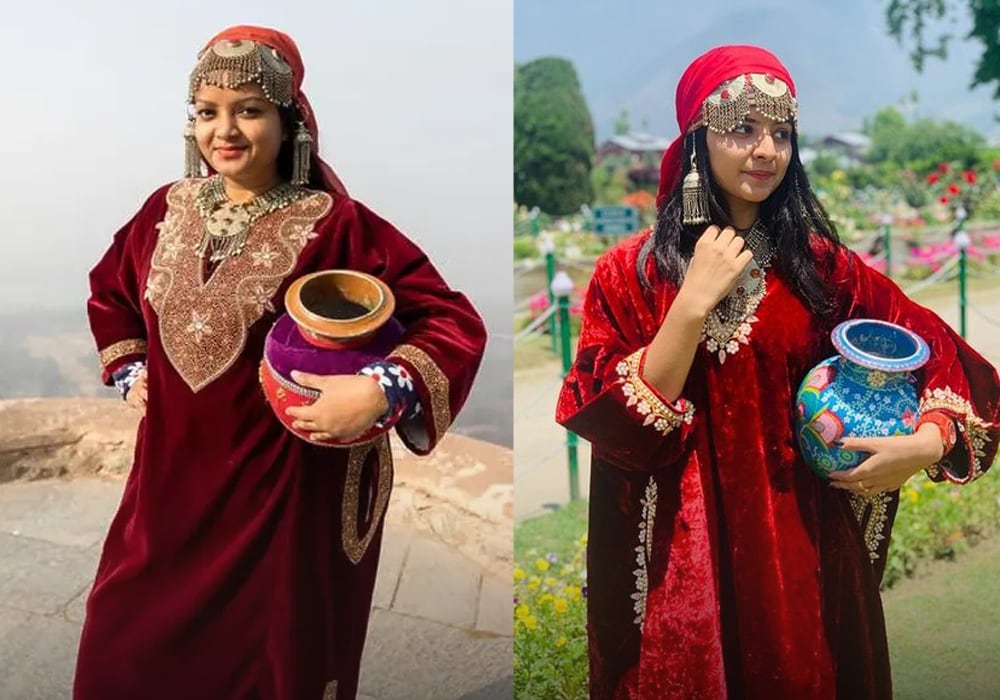
Himachali clothing is a testament to the region’s climate and culture, designed for warmth, comfort, and adorned with vibrant patterns that stand out against the snowy landscapes. As a beautiful expression of Indian wear, the attire is often layered and made from handwoven wool, reflecting a life of resilience and artistry.
Women’s Attire
The traditional dress for women is both practical and beautiful, often consisting of multiple layers.
- Kurtas and Ghagras: A long, loose tunic (kurta) is a common upper garment, worn over a salwar or a flared skirt known as a ghagra. These are typically made of cotton or wool.
- Woolen Shawls: The most iconic element is the shawl. Women drape intricately patterned shawls, like the famous Kullu shawl, over their shoulders for warmth and style. These shawls are adorned with vibrant geometric patterns and floral motifs along the borders.
- Fabrics and Colors: Wool is the primary fabric, including the luxurious and incredibly soft Pashmina. While the base colors are often natural wool tones like cream, gray, and brown, the embroidered patterns burst with bright reds, greens, oranges, and pinks.
Men’s Attire
Men’s traditional wear is designed to be warm, dignified, and functional for life in the mountains.
- Woolen Coats and Churidar: Men often wear a long woolen coat or a jacket, paired with tight-fitting trousers known as churidar. A simple kurta is worn underneath.
- Himachali Caps (Topi): The most distinctive accessory for men is the Himachali topi or cap. This is a flat, round woolen cap with a decorative border, often in a colorful pattern. The color and design of the cap can signify the region the wearer belongs to (e.g., the green-bordered Kinnauri cap or the maroon-bordered Kullu cap).
- Shawls and Mufflers: Like women, men also use woolen shawls and mufflers for extra warmth, often draped stylishly over their shoulders.
Jewelry & Accessories
Himachali jewelry is predominantly made of silver and is known for its bold, intricate, and often symbolic designs.
- Silver Ornaments: Silver is highly favored, and women wear heavy, ornate jewelry. This includes large necklaces (chandrahaar), elaborate headpieces that cover the forehead and hair (chakk), and heavy bracelets and anklets.
- Nose Rings (Nath): A large silver or gold nose ring, often decorated with pearls or beads, is a traditional and striking piece of bridal jewelry.
- Beaded Necklaces: In some regions, particularly Kinnaur and Lahaul-Spiti, multi-stranded beaded necklaces are also popular.
Crafts, Textile Techniques & Prints
The heart of Himachali style lies in its exceptional handloom and handicraft traditions, which have been perfected over centuries.
- Kullu Shawls: This is perhaps Himachal’s most famous textile craft. Woven on traditional looms, these woolen shawls are characterized by their vibrant, patterned borders. The motifs are geometric or floral and are woven using a special technique where colored threads are individually inserted to create the design.
- Chamba Rumal: Known as a “painting in embroidery,” the Chamba rumal (handkerchief) is a unique craft from the Chamba region. It is a piece of fine cotton or silk cloth, embroidered on both sides with scenes from mythology, particularly the life of Krishna. The stitch is so fine that the rumal is perfectly reversible.
- Pashmina Weaving: Himachal is one of the regions where the legendary Pashmina wool is sourced and woven. This incredibly fine and soft wool comes from the undercoat of the Changthangi goat. Weaving Pashmina is a delicate and highly skilled process that results in shawls and stoles of unparalleled softness and warmth.
Cultural Context – Lifestyle, Tradition & Heritage Influences
The clothing and crafts of Himachal Pradesh are a direct response to its mountainous environment and rich cultural tapestry. The harsh, cold climate makes wool the most essential material, and the practice of layering is a practical necessity for staying warm.
The Himachali topi is more than just headwear; it is a symbol of cultural pride and regional identity. The intricate patterns on Kullu shawls and the narrative scenes on Chamba rumals are a form of storytelling, preserving cultural and religious tales. Historically, the region was made up of several small princely states, and royal patronage played a significant role in nurturing these crafts, especially the art of the Chamba rumal. The state’s diverse tribal heritage, particularly in areas like Kinnaur, Lahaul, and Spiti, has also contributed unique motifs and styles to the region’s textile traditions.
When & How These Styles Are Worn Today
While modern clothing is prevalent, Himachali traditional wear is still an integral part of life, especially during festivals and in rural areas.
- Everyday vs. Special Occasions: A woolen shawl and a Himachali cap are common sights in daily life across the state. For weddings and major festivals like Kullu Dussehra, people don their finest traditional attire, complete with elaborate embroidery and heavy silver jewelry.
- Modern Reinterpretations: The timeless appeal of Himachali crafts has made them popular in contemporary fashion. Kullu shawl borders are now used to adorn jackets, bags, and dresses. Pashmina stoles are a global luxury accessory. The Himachali cap has also been adopted by fashion enthusiasts as a unique and stylish accessory.
-
Styling Tips:
- Drape a colorful Kullu shawl over a simple coat or dress to add a vibrant, bohemian touch to your winter wardrobe.
- Pair a classic Pashmina stole with formal wear for an elegant and sophisticated look.
- Use traditional silver jewelry as a statement piece to elevate a modern, minimalist outfit.
Why It Matters – Heritage, Identity & Fashion Inspiration
Preserving the handloom and handicraft traditions of Himachal Pradesh is vital for safeguarding a unique cultural identity and supporting the livelihoods of thousands of artisans. Each handwoven shawl and every embroidered rumal is a piece of living history, embodying skills and stories passed down through generations.
In a world dominated by mass production, the authentic, handcrafted, and sustainable nature of Himachali textiles offers a powerful and inspiring alternative. They bring the warmth, beauty, and soul of the Himalayas to the world, proving that tradition is a profound source of timeless style and modern inspiration.
Discover the Soul of the Himalayas
Himachal Pradesh’s style heritage is a beautiful narrative of resilience, artistry, and a deep connection to the mountains. From the vibrant patterns of a Kullu shawl to the proud silhouette of a Himachali cap, every element tells a story of a people who have woven their culture into the very fabric of their lives.
We encourage you to explore this world of mountain elegance. Consider adding a piece of Himachali craftsmanship to your life, whether it’s a warm woolen shawl, a unique piece of silver jewelry, or a stylish Himachali cap. By doing so, you are not only embracing a beautiful and authentic aesthetic but also helping to celebrate and sustain a magnificent cultural legacy.
The post The Ultimate Guide to Himachal Pradesh – Heritage, Textiles & Traditional Style appeared first on Aza Editorials.