For the past few seasons, we collectively held our breath, slipped into neutral cashmere sweaters, and tried to perfect the art of looking expensive without trying too hard. The stealth-wealth aesthetic commanded our closets, demanding muted palettes and logo-less basics. But let us be honest: whispering gets exhausting. The pendulum of fashion always swings, and right now, it is swinging hard toward something loud, proud, and completely unapologetic.
Welcome to the Glamoratti era.
Glamour has marked its glorious return with a confidence that feels almost defiant. If you have been paying attention to the cultural undercurrents, you know this revival is not sudden. There is a massive, undeniable appetite for dramatic silhouettes that occupy space, statement jewellery that refuses to disappear into an outfit, and high-shine surfaces that assert your presence instead of retreating into the background.
In this guide, we will break down exactly why we are stepping back from the cool detachment of minimalism, how the revival of 1980s excess is taking over, and how you can seamlessly channel this bold new energy into your everyday wardrobe.
What Exactly is the Glamoratti Aesthetic?
At first glance, the Glamoratti aesthetic appears to be all about pure drama. It is built on conspicuous shine, heavy textures, and garments that demand attention the moment you walk into a room. But beneath the glittering spectacle lies a deeper truth: this style has become a form of reassurance. Extravagance here is entirely intentional.
After years of playing it safe with subdued neutrals and “clean girl” aesthetics, dressing up has become an act of rebellion. The Glamoratti 2026 trend is not just about throwing on sequins for the sake of it; it is a calculated embrace of grandeur. It is about understanding that your personal style is a powerful tool to claim your space in the world
The Revival of 1980s Excess: Power Dressing Redefined
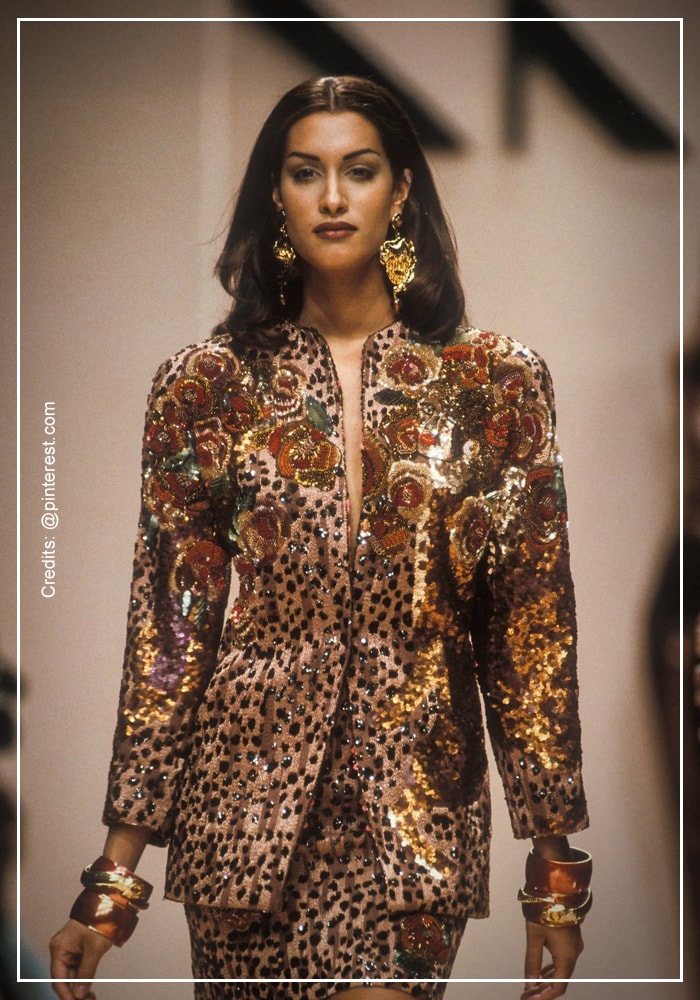
To understand where we are going, we have to look back at where this energy originated. The 1980s saw style as ultimate leverage. During that decade, proportion became directly linked to influence. Think about the iconic visual codes of that era: broad shoulders, heightened structural tailoring, and shimmery, light-catching textures. These elements worked together to project authority at a mere glance.
Glamoratti borrows heavily from these same visual cues, but make no mistake—this is not a costume party. It isn’t driven by simple nostalgia or a desire to imitate the past. What we are seeing now is a fresh, modern embrace of 1980s excess filtered through a present reality that is overrun by tension and uncertainty.
When the world feels chaotic, blending in no longer offers the comfort it once did. Instead, we are looking for armor. Power dressing has returned because standing out feels safer than shrinking down. We are using structured blazers, exaggerated shoulder pads, and bold textures to build a visible fortress of confidence.
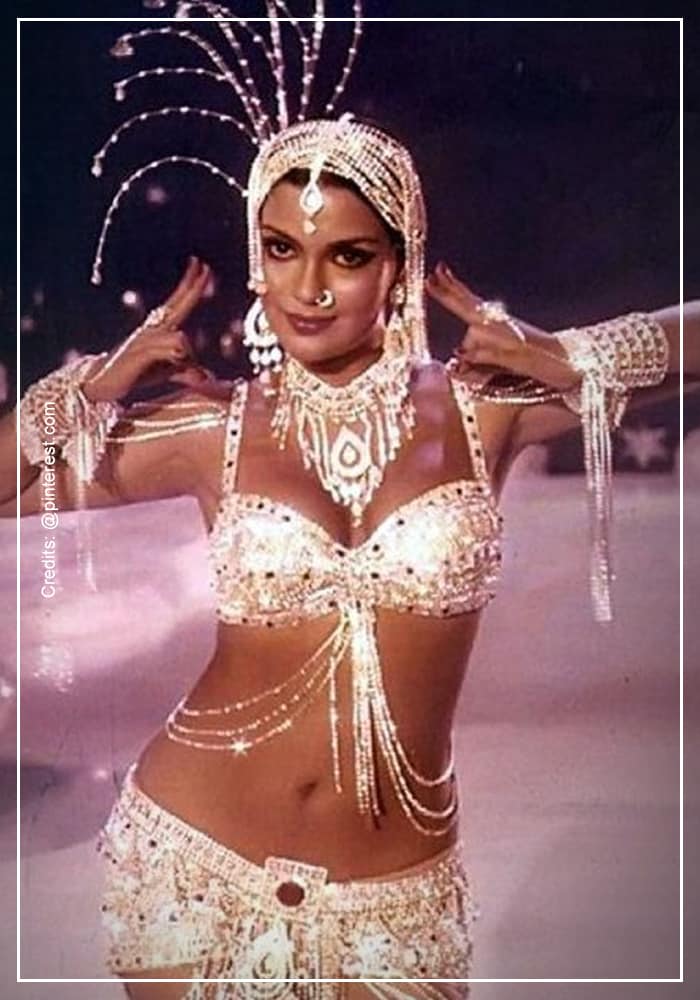
Interestingly, this instinct isn’t entirely new to us—classic Bollywood has always leaned into maximalism, where high-shine sarees, ornate detailing, and unapologetic drama, often seen on icons like Zeenat Aman, proved that more was never excess—it was the point.

Gen Z and Millennials: The Architects of Maximalism
Who is driving this massive shift? Look no further than Gen Z and Millennials. These generations have long existed at the periphery of both strict minimalism and full-blown glamour, experimenting with core aesthetics on a nearly weekly basis. But they are approaching the maximalist fashion trend with a distinct self-awareness, blending pure indulgence with sharp intent.
For younger fashion enthusiasts, visibility is currency. They understand that to be seen is to hold power. They lean into the Glamoratti aesthetic almost instinctively, making choices where silhouettes are explicitly designed to command space rather than quietly blend in.
The result feels incredibly contemporary and assured. It is the cool girl who pairs a heavily embellished, oversized vintage jacket with relaxed denim, or the creative who stacks thick, sculptural gold bangles up her arms for a standard Tuesday coffee run. They read opulence not as a sign of trying too hard, but as a sign of supreme confidence.
Jewellery That Refuses to Whisper
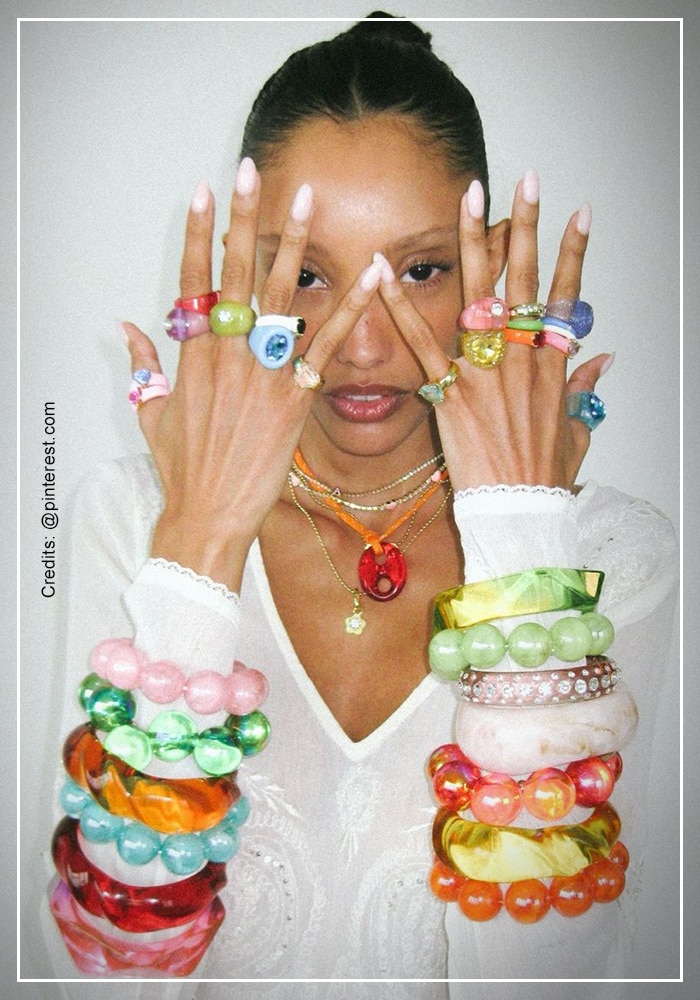
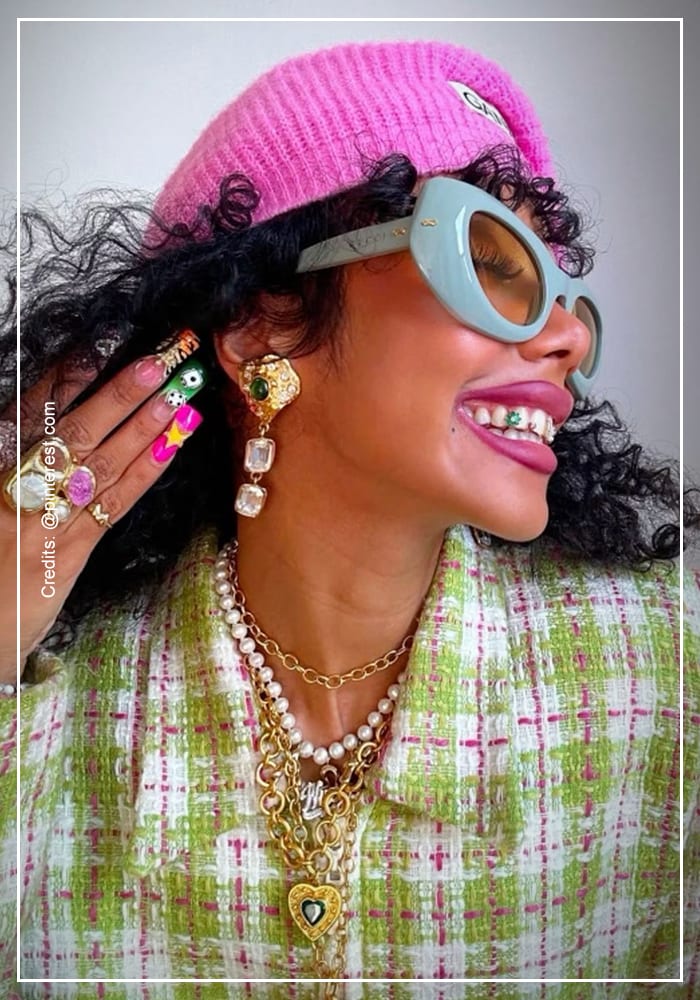
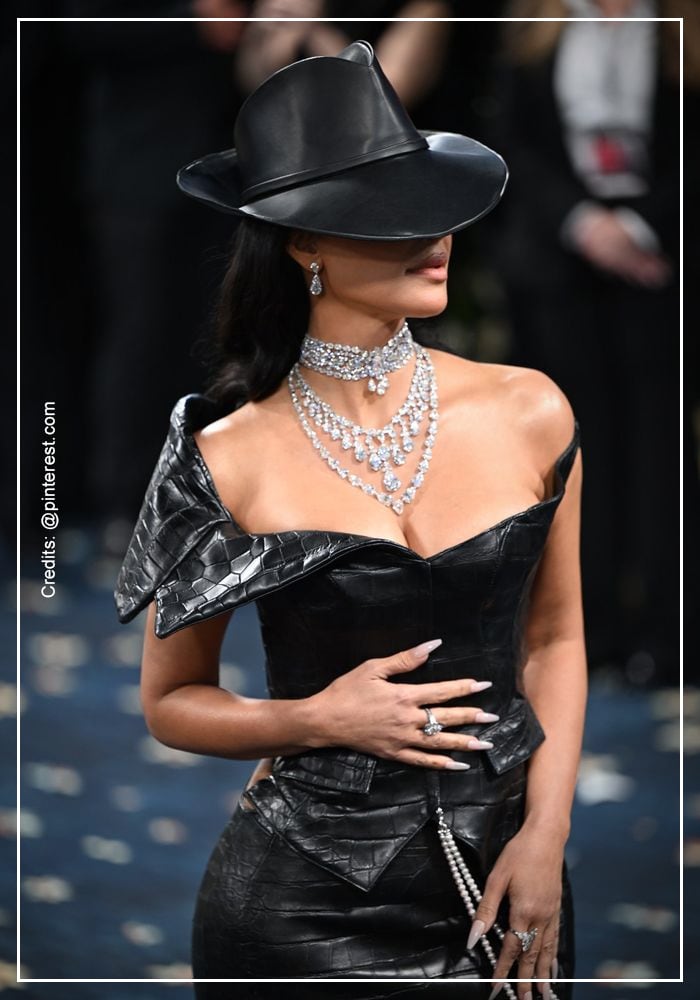
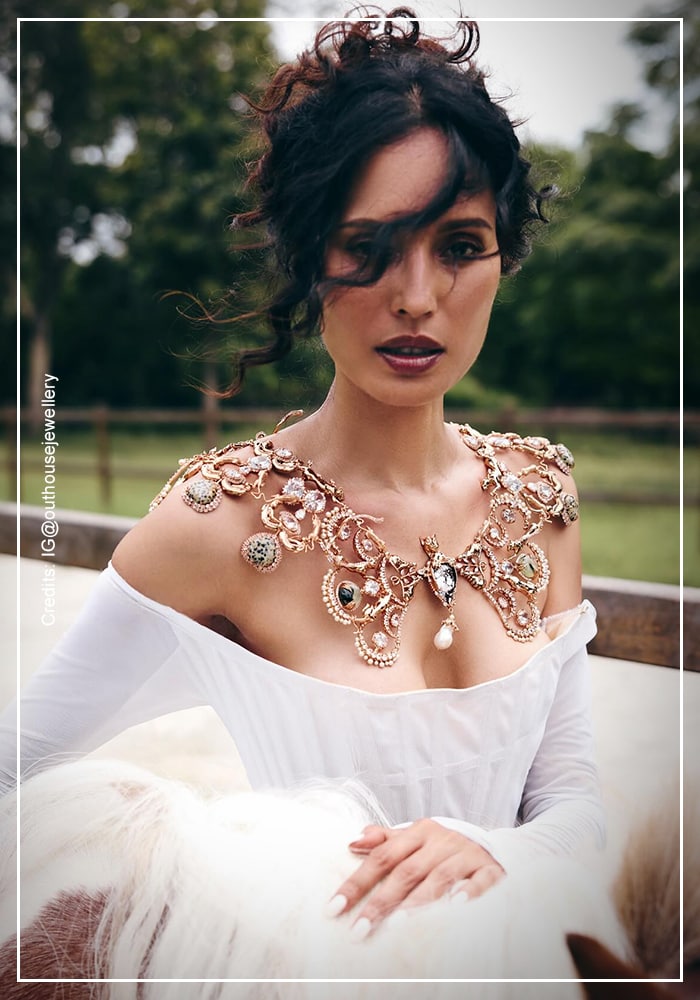
If quiet luxury was defined by microscopic gold hoops and barely-there chains, the Glamoratti era is defined by hardware that packs a serious punch. The accessories follow the exact same direction as the clothing—instead of softening the look, they intentionally heighten the drama.
Statement jewellery takes on a heavier, much more deliberate quality. We are seeing a massive surge in thick metals and sculptural jewellery forms that refuse to merely complement an outfit. These pieces claim their own space entirely.
Gold leads this charge with a stance that feels assertive and heavy. Think chunky collar necklaces, massive domed rings, and earrings that graze the collarbone. In this aesthetic, accessories read as emphatic gestures of power, quietly—or not so quietly—intensifying your overall sense of presence. You do not just wear these pieces; you wield them.
The Influence of Indian Couture
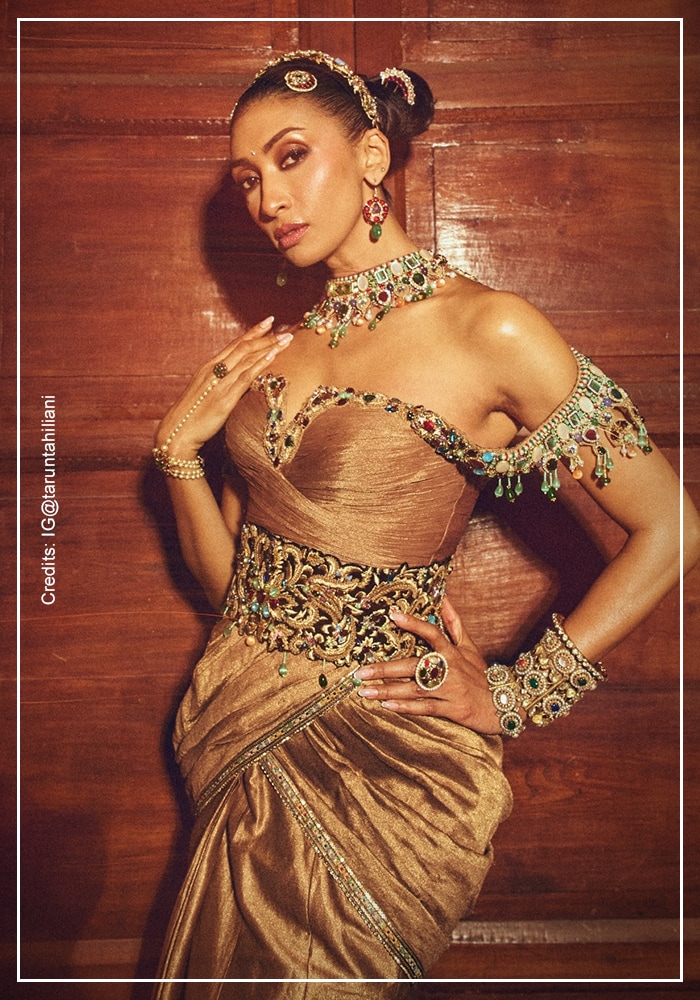
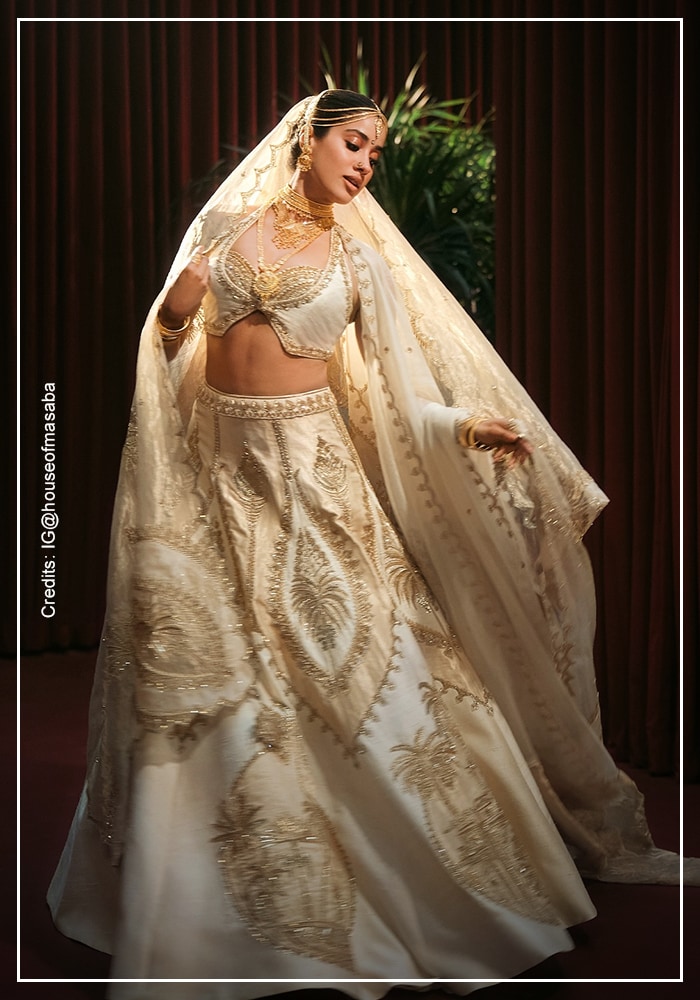
You cannot discuss the modern language of scale and opulence without looking at the massive influence of Indian runways and global couture. The Glamoratti trend draws a direct line of inspiration from the high-impact embellishment of contemporary Indian fashion, where treating spectacle as a central aesthetic language is the absolute norm.
Designers like Tarun Tahiliani, Abhinav Mishra, Falguni Shane Peacock, and Sabyasachi have long treated exaggeration as a language of visual authority. Their work proves that heavy embellishment, intricate beadwork, and monumental silhouettes do not have to be reserved strictly for bridal wear or red carpets.
Within the current style landscape, those same couture instincts are reframed for a younger, global audience. The heavy metallic embroidery, the unapologetic use of shine, and the rich, saturated color palettes seen in Indian couture are bleeding into everyday luxury. It reinforces the idea that extravagance is not a finishing touch—it is the entire point.
Why Maximalism Matters Right Now
Rather than feeling like an accidental or fleeting shift, the return of maximalism carries a clear, unstoppable cultural momentum. Across the entire style spectrum, fashion has begun to reintroduce drama, signaling a gradual, permanent move away from restraint.
Even if minimalism feels sleek and contemporary, it doesn’t always offer the emotional support we crave in unpredictable times. There is a certain vulnerability in stripping everything back. Glamoratti, by contrast, brings immediate assurance. When you put on a sharp-shouldered jacket, layer on heavy gold chains, and step out in a bold silhouette, you are telling the world that you are here, you are taking up space, and you are entirely unbothered by who is watching.
Its return feels not just natural, but completely necessary. We are dressing for the plot, and the plot demands a little bit of spectacle.
How to Embrace the Glamoratti Aesthetic
Ready to ditch the quiet luxury and step into your boldest era? Here is how you can start incorporating the trend into your wardrobe right now:
- Invest in Strong Shoulders: Swap out your slouchy, unstructured cardigans for sharply tailored blazers. Look for vintage 80s cuts that offer natural volume at the shoulders to instantly change your posture and silhouette.
- Stack Heavy Metals: Put the delicate chains away. Opt for chunky gold jewellery, sculptural cuffs, and oversized earrings. Do not be afraid to mix metals as long as the pieces carry visual weight.
- Embrace Shine During the Day: Sequins, metallics, and high-shine fabrics are no longer reserved for midnight. Pair a metallic skirt with a graphic tee or throw a sequined blazer over your favorite vintage jeans.
- Prioritize Texture: Lean into rich, tactile fabrics. Think heavy brocades, lush velvets, and textured leathers that add depth and dimension to your look.
The stealth-wealth days had their moment, but it is time to turn up the volume. The Glamoratti era is calling—and she expects you to dress up for the occasion.
The post The End of Quiet Luxury? Enter the Glamoratti Era appeared first on Aza Editorials.