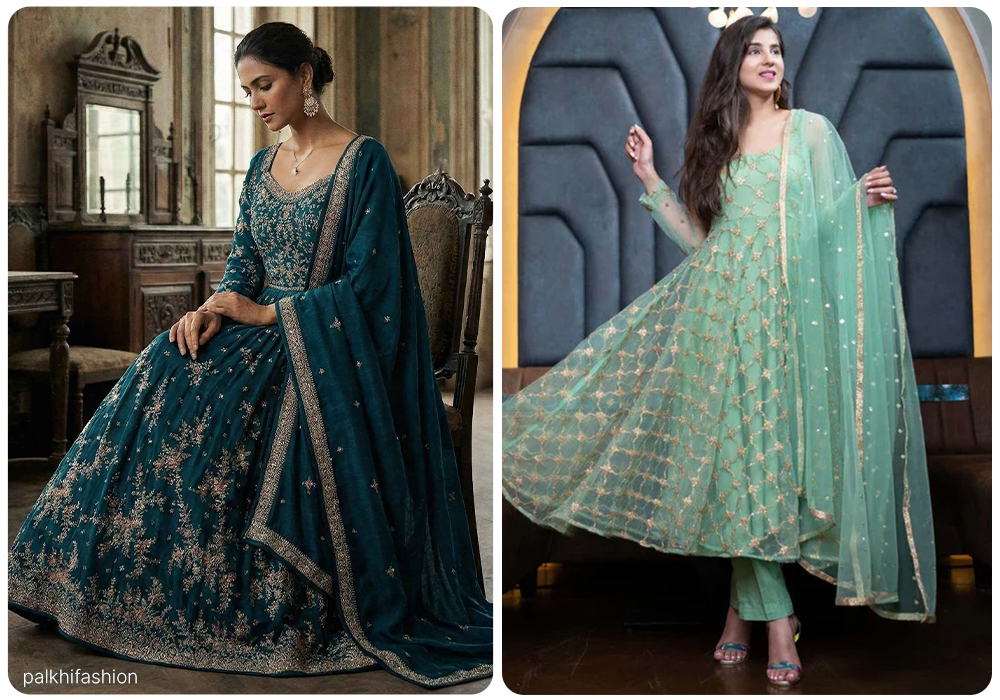
Hartalika Teej 2026 is widely listed for Monday, September 14, 2026, placing it in the middle of a busy Indian festive month. For women planning what to wear, the useful question is not simply “what is traditional?” but “what will feel festive, respectful and comfortable for my version of the day?” This Saree Magic guide focuses on a complete head-to-toe Teej styling guide that keeps ritual comfort and personal style in balance.
Green remains the most recognisable Teej colour story, especially mehndi, parrot, pista and deeper leafy tones, yet it does not need to become a rigid dress code. Pink, maroon, cream, gold, sky blue, onion and peacock-inspired shades can all work when the silhouette and accessories feel rooted in Indian festive dressing. The best result usually comes from choosing one strong idea and giving it room to breathe.
This guide also takes a practical shopping approach. The ClothsVilla references below were selected from active products that are not tracked as sold out at the time of this run, and this article uses a fresh product/image set rather than repeating the recent Janmashtami visual pool. Availability can change, so always check the product page before ordering.
Begin with comfort and symbolism, then add fashion
Begin with comfort and symbolism, then add fashion. Comfort deserves the same attention as embroidery because fasting, puja and family visits can turn the festival into a long day. For Saree Magic, this section keeps the lens on a complete head-to-toe Teej styling guide that keeps ritual comfort and personal style in balance. If the fabric has shine, matte jewellery can calm it. If the textile is quiet, a stronger earring or bangle stack can supply the festive finish.
Use a simple three-part test: first, decide whether the setting is home puja, temple, visiting relatives or an evening gathering; second, choose one hero element such as colour, weave, embroidery or jewellery; third, remove anything that makes movement difficult. This approach is especially useful on Hartalika Teej because the day can involve long periods of sitting and standing. When the outfit passes that practical test, details such as bangles, a bindi, a contrast blouse, a secure dupatta or a neat pallu can be added with much more confidence. The result feels considered rather than crowded, and it remains easy to restyle for another festive occasion.

Choose the silhouette for your actual celebration
Choose the silhouette for your actual celebration. Traditional dressing becomes more personal when one familiar element is paired with a quieter modern decision. For Saree Magic, this section keeps the lens on a complete head-to-toe Teej styling guide that keeps ritual comfort and personal style in balance. Pinning and fit are practical styling tools. A beautifully styled outfit that needs constant adjustment quickly becomes tiring.
Use a simple three-part test: first, decide whether the setting is home puja, temple, visiting relatives or an evening gathering; second, choose one hero element such as colour, weave, embroidery or jewellery; third, remove anything that makes movement difficult. This approach is especially useful on Hartalika Teej because the day can involve long periods of sitting and standing. When the outfit passes that practical test, details such as bangles, a bindi, a contrast blouse, a secure dupatta or a neat pallu can be added with much more confidence. The result feels considered rather than crowded, and it remains easy to restyle for another festive occasion.

Green is classic, but it is not the only elegant choice
Green is classic, but it is not the only elegant choice. Photographs are important, but a successful Teej outfit should also behave well while you sit, walk, pray and meet family. For Saree Magic, this section keeps the lens on a complete head-to-toe Teej styling guide that keeps ritual comfort and personal style in balance. The goal is a look that feels connected to the occasion without becoming costume-like or overly literal.
Use a simple three-part test: first, decide whether the setting is home puja, temple, visiting relatives or an evening gathering; second, choose one hero element such as colour, weave, embroidery or jewellery; third, remove anything that makes movement difficult. This approach is especially useful on Hartalika Teej because the day can involve long periods of sitting and standing. When the outfit passes that practical test, details such as bangles, a bindi, a contrast blouse, a secure dupatta or a neat pallu can be added with much more confidence. The result feels considered rather than crowded, and it remains easy to restyle for another festive occasion.

Jewellery layering without heaviness
Jewellery layering without heaviness. Instead of treating festive wear as a fixed formula, build the look in layers that can be added or removed during the day. For Saree Magic, this section keeps the lens on a complete head-to-toe Teej styling guide that keeps ritual comfort and personal style in balance. A clear focal point also makes the outfit look more expensive: let the saree border, lehenga embroidery, dupatta or jewellery lead rather than asking all four to compete.
Use a simple three-part test: first, decide whether the setting is home puja, temple, visiting relatives or an evening gathering; second, choose one hero element such as colour, weave, embroidery or jewellery; third, remove anything that makes movement difficult. This approach is especially useful on Hartalika Teej because the day can involve long periods of sitting and standing. When the outfit passes that practical test, details such as bangles, a bindi, a contrast blouse, a secure dupatta or a neat pallu can be added with much more confidence. The result feels considered rather than crowded, and it remains easy to restyle for another festive occasion.

Bangles, bindi and small details that photograph well
Bangles, bindi and small details that photograph well. The strongest styling choices are usually the ones that can be repeated after the festival with a different blouse, dupatta or jewellery set. For Saree Magic, this section keeps the lens on a complete head-to-toe Teej styling guide that keeps ritual comfort and personal style in balance. If the fabric has shine, matte jewellery can calm it. If the textile is quiet, a stronger earring or bangle stack can supply the festive finish.
Use a simple three-part test: first, decide whether the setting is home puja, temple, visiting relatives or an evening gathering; second, choose one hero element such as colour, weave, embroidery or jewellery; third, remove anything that makes movement difficult. This approach is especially useful on Hartalika Teej because the day can involve long periods of sitting and standing. When the outfit passes that practical test, details such as bangles, a bindi, a contrast blouse, a secure dupatta or a neat pallu can be added with much more confidence. The result feels considered rather than crowded, and it remains easy to restyle for another festive occasion.

Hair that survives a full day of rituals
Hair that survives a full day of rituals. The most useful way to approach this part of the look is to start with the hours you will actually spend wearing it. For Saree Magic, this section keeps the lens on a complete head-to-toe Teej styling guide that keeps ritual comfort and personal style in balance. Pinning and fit are practical styling tools. A beautifully styled outfit that needs constant adjustment quickly becomes tiring.
Use a simple three-part test: first, decide whether the setting is home puja, temple, visiting relatives or an evening gathering; second, choose one hero element such as colour, weave, embroidery or jewellery; third, remove anything that makes movement difficult. This approach is especially useful on Hartalika Teej because the day can involve long periods of sitting and standing. When the outfit passes that practical test, details such as bangles, a bindi, a contrast blouse, a secure dupatta or a neat pallu can be added with much more confidence. The result feels considered rather than crowded, and it remains easy to restyle for another festive occasion.

Makeup for daylight, indoor puja and evening photos
Makeup for daylight, indoor puja and evening photos. A polished festive outfit usually works because the proportions are controlled, not because every surface is decorated. For Saree Magic, this section keeps the lens on a complete head-to-toe Teej styling guide that keeps ritual comfort and personal style in balance. The goal is a look that feels connected to the occasion without becoming costume-like or overly literal.
Use a simple three-part test: first, decide whether the setting is home puja, temple, visiting relatives or an evening gathering; second, choose one hero element such as colour, weave, embroidery or jewellery; third, remove anything that makes movement difficult. This approach is especially useful on Hartalika Teej because the day can involve long periods of sitting and standing. When the outfit passes that practical test, details such as bangles, a bindi, a contrast blouse, a secure dupatta or a neat pallu can be added with much more confidence. The result feels considered rather than crowded, and it remains easy to restyle for another festive occasion.

Final head-to-toe Teej readiness check
Final head-to-toe Teej readiness check. For Teej, colour carries much of the visual message, so fabric and ornament can stay more selective. For Saree Magic, this section keeps the lens on a complete head-to-toe Teej styling guide that keeps ritual comfort and personal style in balance. A clear focal point also makes the outfit look more expensive: let the saree border, lehenga embroidery, dupatta or jewellery lead rather than asking all four to compete.
Use a simple three-part test: first, decide whether the setting is home puja, temple, visiting relatives or an evening gathering; second, choose one hero element such as colour, weave, embroidery or jewellery; third, remove anything that makes movement difficult. This approach is especially useful on Hartalika Teej because the day can involve long periods of sitting and standing. When the outfit passes that practical test, details such as bangles, a bindi, a contrast blouse, a secure dupatta or a neat pallu can be added with much more confidence. The result feels considered rather than crowded, and it remains easy to restyle for another festive occasion.

A simple Hartalika Teej styling matrix
For morning puja, prioritise breathable or lighter fabrics, secure drapes and jewellery that will not become uncomfortable while sitting. For temple visits, keep the pallu or dupatta controlled and choose footwear you can remove and put back on easily. For family lunches or visits, a polished blouse, coordinated bangles or a neat hair accessory can lift the same base outfit. For an evening gathering, deepen the contrast through earrings, a richer lip colour or a more defined dupatta placement instead of changing the entire outfit.
Women who prefer sarees can use pleats and pallu placement to control volume. Lehenga wearers can keep the blouse and jewellery lighter when the skirt carries heavy work. Suit-set wearers can treat the dupatta as the hero piece. None of these formulas is compulsory; they are simply ways to make the look coherent and comfortable.
Hartalika Teej 2026 FAQs
What is a good colour to wear for Hartalika Teej 2026?
Green is the classic starting point, but pink, maroon, cream, gold and peacock-inspired combinations can also look festive. Choose a shade that suits your wardrobe and the time of day.
Can I wear a saree for a long Teej fast?
Yes. Choose a manageable fabric, secure the pleats and pallu, and avoid a blouse or waistband that feels restrictive after several hours.
Is a lehenga too heavy for Hartalika Teej?
Not necessarily. Medium-flare or lighter-fabric lehengas can work well for family or evening celebrations; reserve very heavy bridal volume for occasions where you will not need to move much.
What jewellery works best for Teej?
Bangles, earrings, a bindi and one necklace can create a traditional finish. If the outfit is heavily embroidered, reduce the jewellery layers so the overall look stays balanced.
How do I avoid buying something I will wear only once?
Choose a saree, lehenga or suit that can be restyled for Navratri, Diwali, wedding functions or family events. Change the blouse, dupatta or jewellery rather than replacing the full outfit.
Final checklist
Before getting ready, test the outfit by sitting, walking and raising your arms; secure anything that slips; keep one hero detail; and carry only the accessories you can comfortably wear for several hours. Browse Sarees, Lehenga Choli and Latest Trending Ethnic Wear for more options. A thoughtful Teej outfit should support the celebration rather than distract from it.
Editorial note: Product availability and catalogue details can change. Product links in this guide are styling references from ClothsVilla and should be checked live before purchase.